

Curtains enhance the beauty of a room; in addition, they also help regulate light and provide privacy. It also helps to stay away from harsh sunlight. However, because these curtains are always placed on the doors or windows, over a period of time, the curtains collect dust, allergens, pet dander, and other particles.
And because of all these, daily cleaning of curtains becomes essential. The challenge is that all the different fabrics do not require the same cleaning techniques. If a wrong technique or detergent is used for curtain cleaning, then it can cause shrinkage, fading, or damage to delicate materials.
It is important to have a clear idea about different types of curtain fabrics to maintain their appearance, extend their lifespan, and keep your home fresh and healthy.
Why Curtain Fabric Matters
Curtain Fabrics have their own unique properties and care requirements to keep them fresh and clean. Some fabrics can be easily washed in a machine, while others may require hand washing at home or professional dry cleaning services. It is very important to always check the care label before putting them in the wash or giving them for dry cleaning. Following the recommended cleaning instructions helps prevent costly damage and ensures the fabric remains in excellent condition.
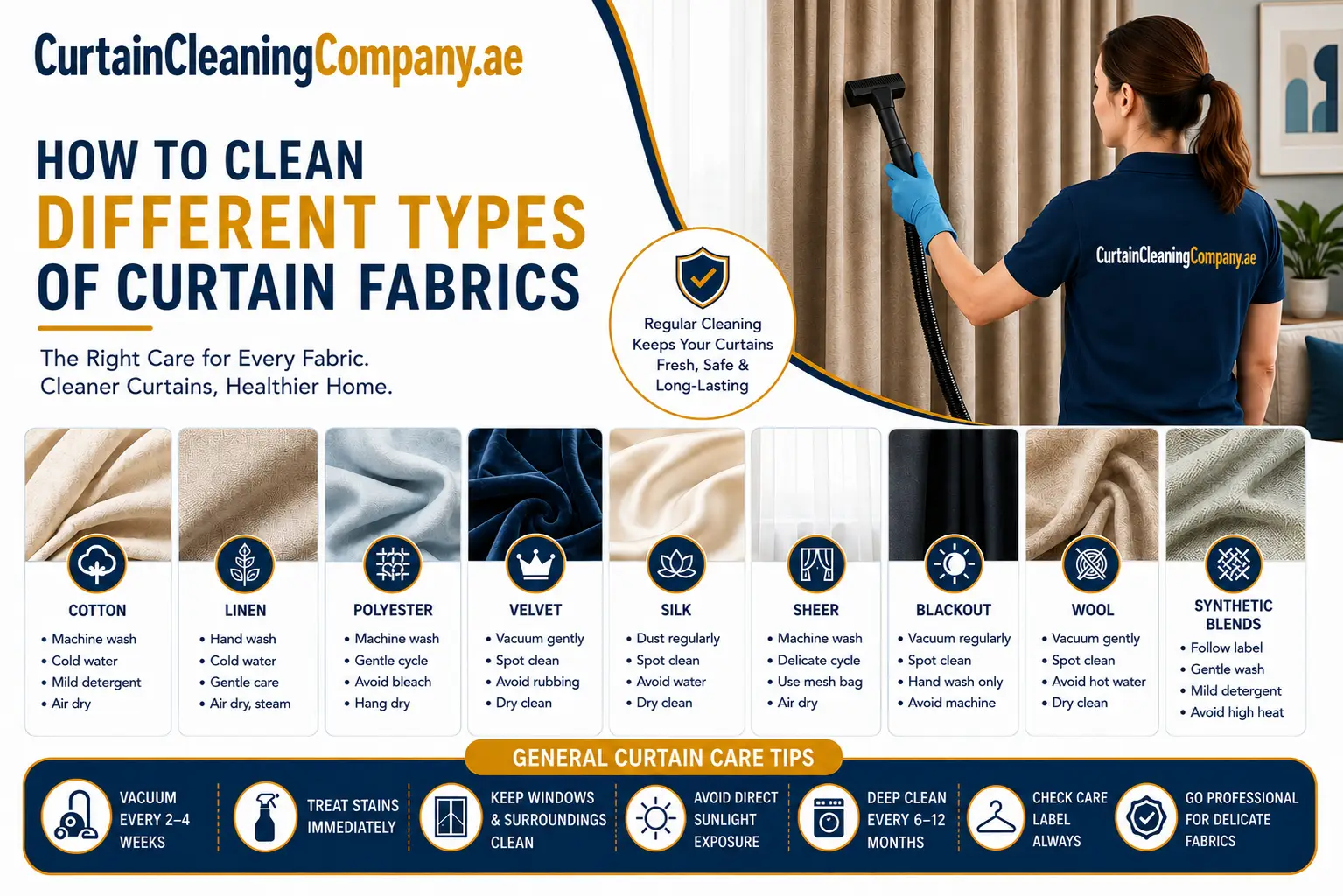
Cotton Curtains
Cotton is versatile, breathable, and easy to maintain, and therefore it is one of the most liked fabrics by people for curtains.
How to Maintain Cotton Curtains
- Vacuum the curtains with the help of the brush attachment
- Use Cold or Lukewarm Water for a machine wash on a gentle cycle.
- Mild Detergent to be used to prevent fading of the curtain color.
- Don’t put too many curtains at once in a washing machine, as this can damage your curtains badly.
- Air drying is the most recommended option to prevent shrinkage.
Tips: If cotton curtains are washed in hot water or dried at high temperatures, they can cause shrinkage. Ironing them when wet can give a smooth and perfect touch.
Linen Curtains
Linen Curtains are very delicate materials, and therefore, they require extra care to maintain their natural and rich appearance.
How to Clean Linen Curtains:
- Vacuum daily to remove dust from the curtain surface
- Follow the care label instructions, and if mentioned, hand-wash with mild detergent.
- Cold Water is recommended for washing Linen curtains, and please no vigorous scrubbing.
- Lay it flat or hang it for air drying
Tips: Linen curtains can get wrinkles easily; steaming is often preferred over ironing. For expensive or lined linen curtains, professional curtain dry cleaning is always recommended.
Polyester Curtains
Polyester is durable, wrinkle-resistant, and easy to maintain, making it a popular choice for modern homes.
How to Clean Polyester Curtains:
- Vacuum monthly to remove dust buildup.
- The machine washes using a gentle cycle with cold water.
- Use a mild detergent and avoid bleach
- Hang immediately after washing to prevent wrinkles.
Tips: Polyester dries quickly and generally retains its shape well. It is one of the easiest curtain fabrics to maintain.
Velvet Curtains
Velvet curtains add luxury and elegance to a room but require special care due to their thick pile texture.
How to Clean Velvet Curtains:
- Vacuum gently using a soft brush attachment.
- Spot clean stains immediately with a damp cloth.
- Avoid rubbing, as this can damage the fabric texture.
- Most velvet curtains should be professionally dry-cleaned.
Tips: Always test any cleaning solution on a hidden area first. Excess moisture can crush the velvet pile and affect its appearance.
Silk Curtains
Silk curtains are delicate and sophisticated but highly sensitive to sunlight, moisture, and harsh cleaning methods.
How to Clean Silk Curtains:
- Dust regularly with a soft brush or vacuum on low suction.
- Spot clean carefully using a gentle fabric-safe solution.
- Avoid direct exposure to water whenever possible.
- Professional dry cleaning is strongly recommended.
Tips: Silk can lose color and strength if washed incorrectly. Protect silk curtains from prolonged sunlight exposure to prevent fading.
Sheer Curtains
Sheer curtains can quickly collect dust because they are very light in weight. But sheer curtains enhance the beauty of the home.
How to Clean Sheer Curtains:
- Sheer Curtains can be shaken outdoors regularly to remove loose dust.
- Can be washed in a machine on a delicate cycle using cold water.
- When washing with other clothes in the machine, put them in a mesh laundry bag for extra protection.
- The air dries immediately after washing.
Tips: Avoid high-speed spinning and tumble drying, as sheer fabrics can tear easily.
Blackout Curtains
Blackout curtains are designed with special backing materials that block light and improve insulation.
How to Clean Blackout Curtains:
- Vacuum blackout curtains on a regular basis to prevent dust buildup.
- Clean the stains immediately using mild soap and water.
- Hand washing is only recommended if mentioned by the manufacturer on the care label.
- Don’t do machine washing unless specified on the care label.
Tips: Improper washing can damage the blackout coating and reduce its effectiveness.
Wool Curtains
Wool curtains provide excellent insulation and a luxurious appearance, but they require careful handling.
How to Clean Wool Curtains:
- Vacuum gently and frequently.
- Spot clean minor stains immediately.
- Avoid machine washing unless specifically permitted.
- Professional dry cleaning is usually the safest option.
Tips: Wool can shrink significantly when exposed to hot water or excessive agitation.
Synthetic Blend Curtains
Many modern curtains are made from fabric blends that combine the benefits of multiple materials.
How to Clean Synthetic Blends:
- Read and follow the manufacturer’s care instructions carefully.
- Vacuuming regularly is a must to remove dust buildup
- Use gentle washing methods and mild detergents.
- Avoid excessive heat during washing and drying.
Tips: Fabric blends often offer better durability and easier maintenance compared to natural fibers.
General Curtain Cleaning Tips
Below mentioned general practices can be taken into consideration for keeping the curtains clean
- Curtains should be vacuumed every two to four weeks
- Try to treat the stains immediately before they become permanent on your curtains.
- Always keep windows and the surrounding areas clean to reduce dust transfer to your curtains.
- Try to change curtains periodically if they receive direct sunlight.
- Deep Cleaning of the curtains should be done every 6 to 12 months.
- Go for Professional Dry Cleaning for delicate, expensive, or heavily soiled curtains.
Final Thoughts
In any home, curtains are an important part of Home Decor. They provide us comfort and protect us from direct harsh sunlight during the daytime. But simultaneously, they also act as filters that collect dust, allergens, and pollutants. Therefore, a daily cleaning routine is very important to keep the indoor environment clean and healthy.
By learning about the specific cleaning requirements of different curtain fabrics, one can keep the curtains looking fresh, functioning effectively, and enhancing the home’s appearance for years to come. Whether you choose DIY maintenance or professional cleaning services, regular curtain care is a worthwhile investment in both your home and your family’s well-being.